



Green shores at the University of St Andrews
Green Shores is the longest-running coastal habitat restoration project in Scotland – for more than 25 years, it has focused on the research and regeneration of the rare saltmarshes.
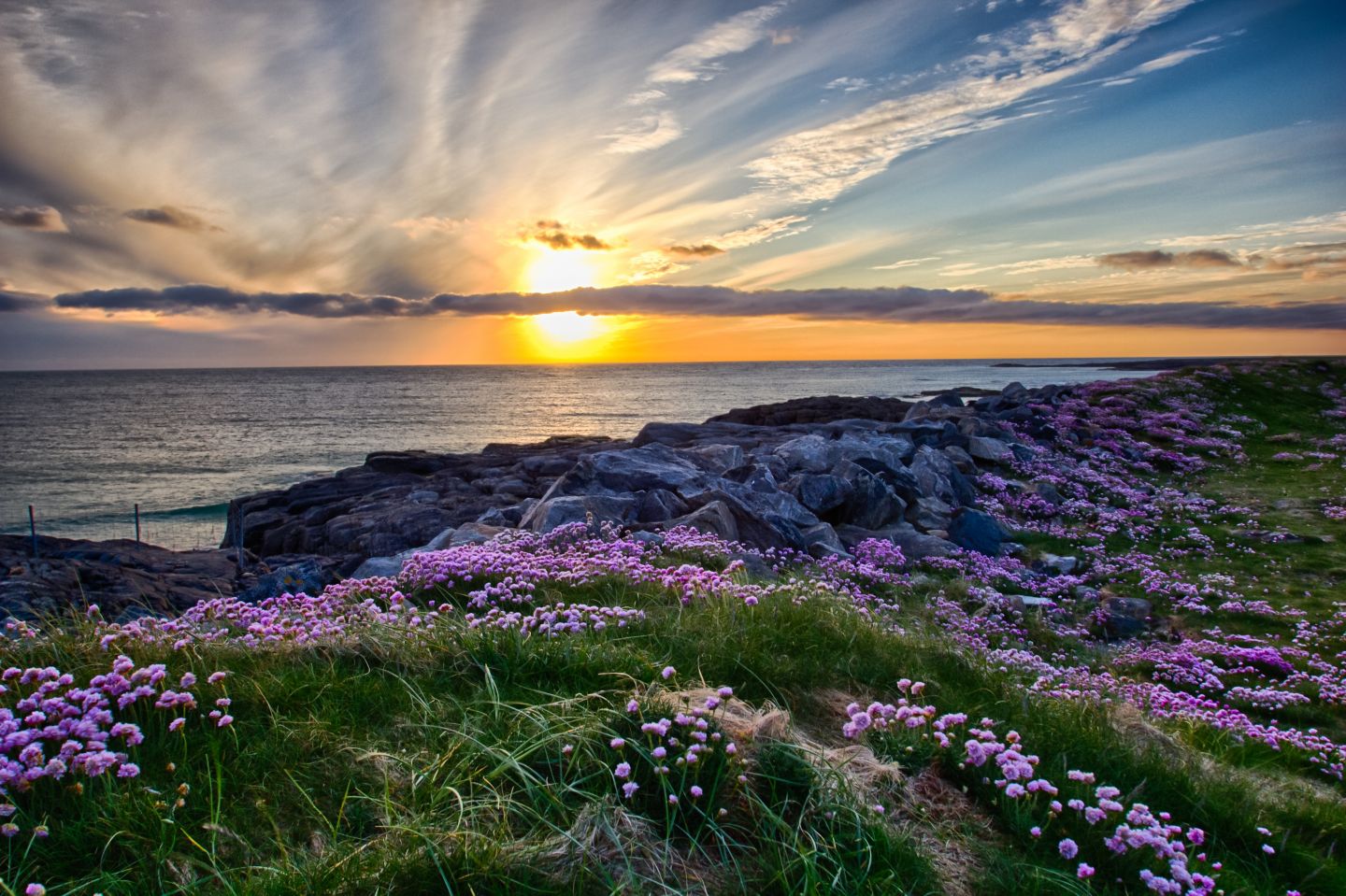
“Saltmarshes are a treasure trove of rich and unique wildlife,” says Dr Clare Maynard, a saltmarsh specialist who devised the initiative following her PhD at the University of St Andrews. “From ospreys diving into the waters at high tide to colourful salt-tolerant flora clinging to the ground, the Eden Estuary is the shining heritage of Scotland’s low-lying muddy shores.”
Saltmarshes provide a wealth of important functions: she points out – they play a leading role in carbon storage, absorb up to 40 times more carbon than an equivalent area of temperate woodland. And, along with sand dunes, saltmarshes act as one of the first billion of Scottish land assets (buildings and infrastructure) from coastal flooding and erosion.
The Green Shores team propagates plants, conducts research and monitoring, and installs storm fencing to protect newly planted marshes during their early stages. The success of the initiative, which runs throughout Scotland, has garnered significant recognition: Green Shores played a key role in Royal Dornoch Golf Club’s work in tackling coastal erosion, which in 2024 won the Sustainable Project of the Year prize at the Golf Environment Awards.
The project also offers welcome opportunities to engage with nature and community. “Whether young people learning new skills, military personnel lending team strength, students seeking conservation opportunities or chief executives trading desks for the dirt – we find that muddy work and a worthy cause can unite people to do even more to support Scotland’s coast.”
Green Shores receives funding from the Scottish government’s Nature Restoration Fund.
NatureScot – St Andrews Coastal Habitat Restoration
Managed by NatureScot. Established in 2021, this pioneering fund has invested more than £65 million in projects designed to help restore indigenous species, woodland, rivers and seas on the path to recovery.
Another scheme initiated by the university, again in close partnership with NatureScot, is restorative, if slightly unromantic, name Restoring the St Andrews Coastal Habitat Network. A concerted effort involving multiple landowners, students and volunteers, it has resulted in the restoration of 27 sites along a 10-mile stretch of the coastline around St Andrews.
Key activities include planting native species, the quality of the habitats and creating “nature networks” between villages. Interventions have included cattle grazing, woodland, scrub and hedge planting, wetland and meadow creation, and dune restoration. The improved habitats now support pollinators, amphibians, small mammals, birds and butterflies.
“The project shows that with the right support, we can achieve great things for nature in a relatively short space of time,” says Dr Katherine Leys, NatureScot’s head of biodiversity and geodiversity. “In only 15 months, the team has created and enhanced woodland, meadow, wetland and saltmarsh habitats, providing excellent benefits for wildlife, climate and nature-based flood management. We’re proud to be able to support this kind of positive action through the Nature Restoration Fund.”
Still, when it comes to protecting habitats, the goalposts seem always to be moving. “It’s as long as a bit of string, isn’t it?” says Alistair Macleod, a St Andrews resident and leader of a non-profit organisation that aims to create a more sustainable community and has been heavily involved in the project.
“Now, we’ll be looking to East Neuk, which is really denuded of trees,” Macleod says. “The region has approximately seven per cent tree cover. Our St Andrews project has shown that there are huge opportunities to work with local landowners who have the vision to integrate nature into land use.”
These initiatives make up a “tapestry of nature-based projects” known as the St Andrews Forest, which is hoped to grow further. Work will soon be net-zero by 2035 – a vision that continues to inspire us here at the Old Course Hotel.